The streets of Ubud

Posted on February 27, 2014

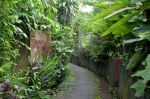
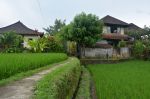
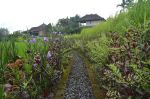
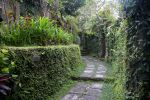
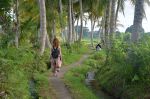
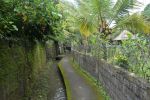
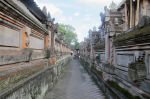
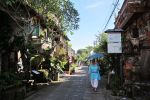
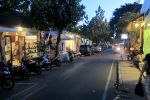
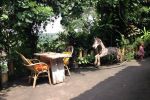
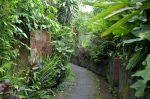
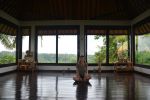
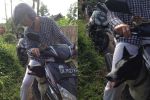
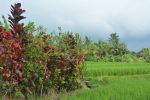
Ubud, Bali, Indonesia:  We spend a lot of our time inquisitively exploring the streets of Ubud. Some we can zip along by scooter, but the more interesting ones are pathways that meander through rice paddies and family compounds. Our ‘street,’ for example, takes us over the Campuan Gorge, through Kadek’s family compound, along the rice paddy, past the coconut tree, over some stepping-stones and then to home. When we head out to pottery and batik in the mornings, we hop on the scooter and battle the pandemonium of Ubud’s streets. The rules of the road are really just friendly suggestions. So, the real fun begins when we encounter one of these hold-your-breath intersections or tiny one-way streets. We pull our knees in & hope for the best.

Traditional Balinese family compounds

Posted on February 27, 2014

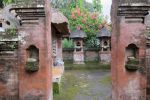
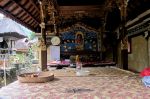
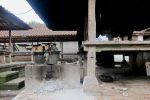
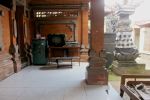
Ubud, Bali, Indonesia:  Driving around Ubud, there are times when we can’t see past many of the thick walls built up along the streets. We learned these are karangs, traditional family compounds composed of many homes and filled with extended family.

Within the compound is the family temple, which is actually a collection of five+ small shrines placed on high pedestals. These are dedicated to ancestor worship, specific Hindu gods or ancient spirits. Further within the compound there are a number of small houses or open sided pavilions, organized around a main house which is occupied by the current head of the family and his immediate family, while the smaller dwellings house visiting relatives and children.

Within these compounds, much effort and expense goes towards the decoration of doors and gateways. Doors are carved from rain tree woods and painted, but may also be gilded with gold leaf in the case of high caste families. Gateways are often highly ornamented, often with the Bhoma head, killer and eater of demons.

Back in Brooklyn…kinda

Posted on February 27, 2014

 6
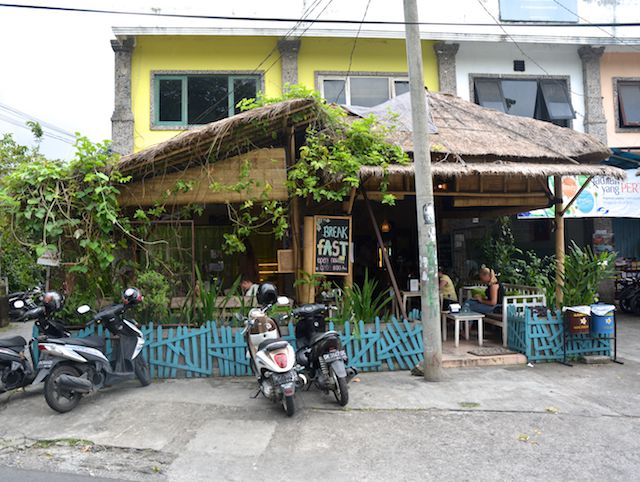
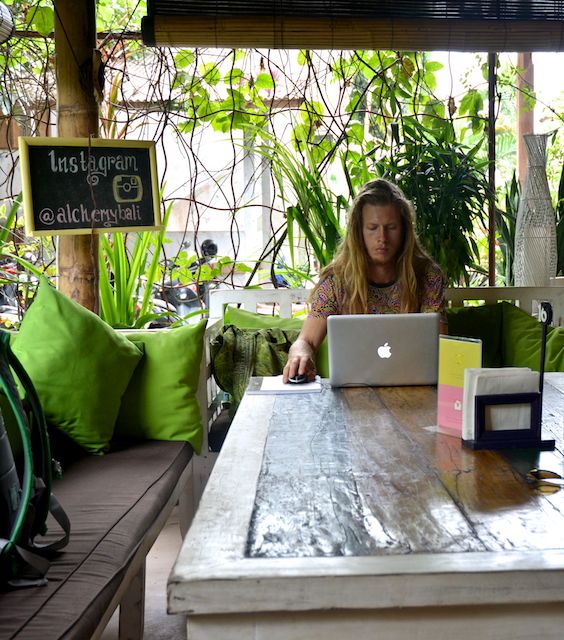
Ubud, Bali, Indonesia: Despite being a world away from the modern conveniences of home, there are some signs of Western life sprinkled across Ubud. There’s Alchemy, a hipster/yogi/ Brooklynite cafe down the street.

 3
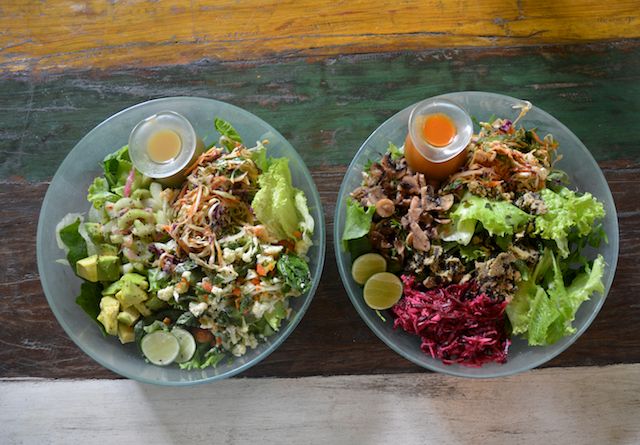
We discovered this place driving by on our motor bike, and couldn’t help but notice how different it was than the local warung we’d been visiting for most meals. Alchemy was clearly opened by a Westerner, hoping to attract all the other Aussies, Kiwis, Germans and Americans here looking for organic, gluten-free, vegan, sugar-free, probiotic, holistic, etc fare.
 1
We love the Indonesian food and eat local for most meals, but every once in a while it is nice to have some flavor from home. We laugh and say, ‘Want to go to Little Brooklyn for lunch today?


 5

Our neighborhood

Posted on February 26, 2014

Ubud, Bali, Indonesia:  We’ve been here just over 2 weeks and have settled in to our community and a routine. Our bungalow sits in a rice paddy in Penestanan, a traditional village of artists and bead-workers who live and work in their walled family compounds.  Population: approximately 2000, which is quite large for a Balinese village. It’s certainly off the beaten path, and giving directions to someone trying to find us goes something like this: take the main road from Ubud towards the Bintang supermarket, go 100 meters.  On your left, take the Campuhan Steps all the way up the hill. Turn right at the top, walk straight past our yoga studio, past our regular eatery, the Yellow Flower Cafe, go left, walk down a handful of stairs past 3 rice paddies and our bungalow is on the right.

Because we are situated within a traditional Balinese family compound, we have loosely become part of this family during our stay here. Kadek, the owner of the land, comes to check in on us daily – is our motor scooter working properly, do we want to find another restaurant nearby, do we know how to get to the beach? When we walk by Kadek’s house, everyone smiles and says good morning, and his dog Whiskey comes by for cheese each night. Sometimes he even hops on board the scooter as we’re heading out for the day…

My art project: Balinese batik

Posted on February 20, 2014

Ubud, Bali, Indonesia: One of the reasons we chose Ubud was for its arts community. Expat artists have been coming here since the 1920s. We knew there would be no shortage of museums, galleries and artists offering workshops and studio time to visitors like us.

 3

I chose to focus my art project on batik because I’ve always been interested in fabric making and textiles. Before leaving the States, my only textile-related activity was knitting. One of the things I love about knitting is picking out beautifully colored silk, wool or cotton yarns and seeing them come together in an eclectic pattern and fabric. So, it wasn’t a big leap to want to experiment further with color, fabrics and making new patterns with Balinese batik.

 1

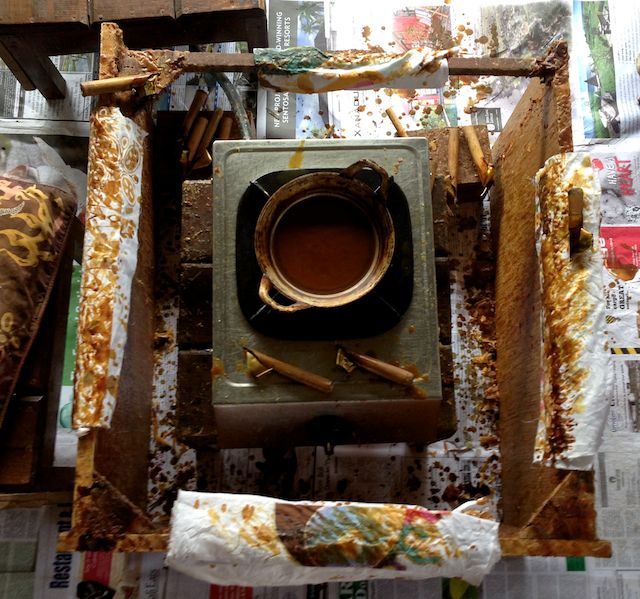
The ancient art of batik is a wax resist dyeing technique on fabric. It’s existed across Indonesia, Egypt, China, India, Japan, Nigeria and Senegal for thousands of years. Traditional batik fabrics are highly ornate, highly symbolic and oftentimes made for religious ceremonies.

 9  2

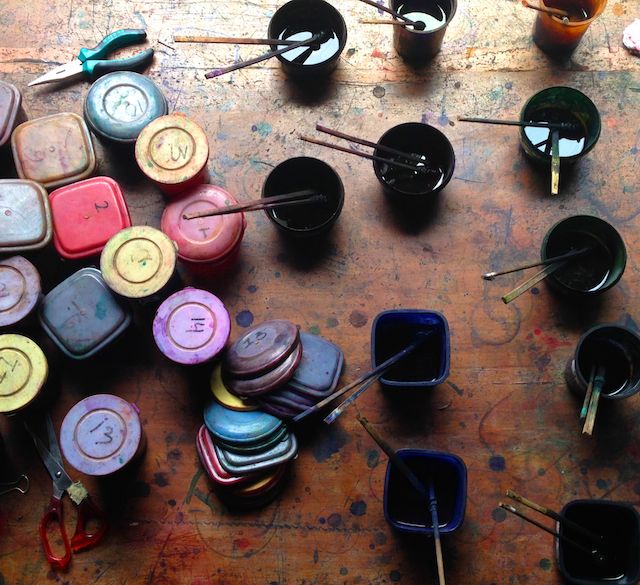
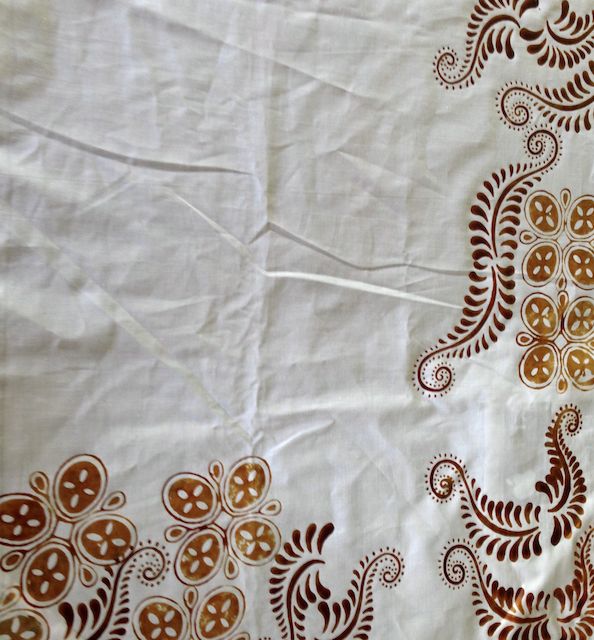
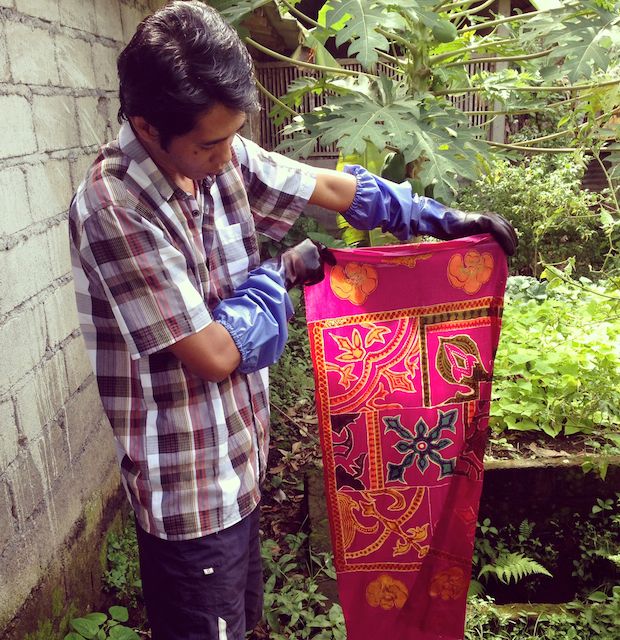
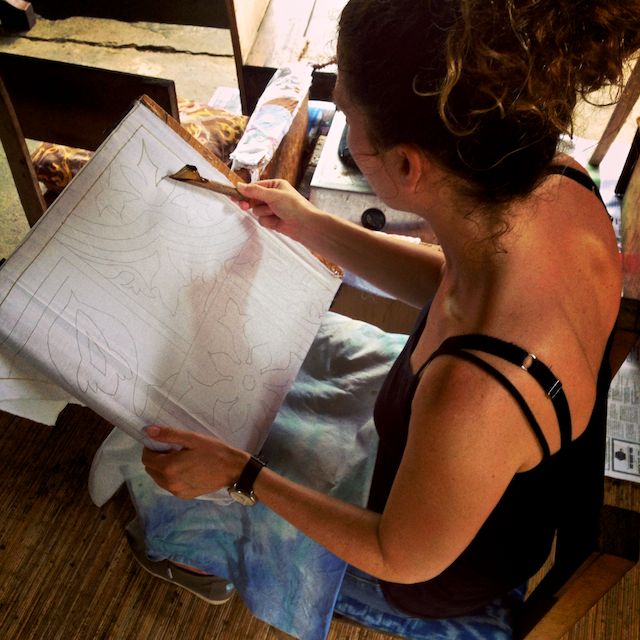
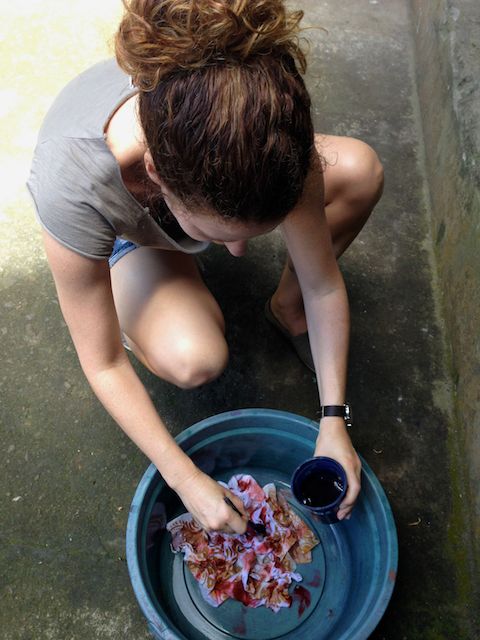
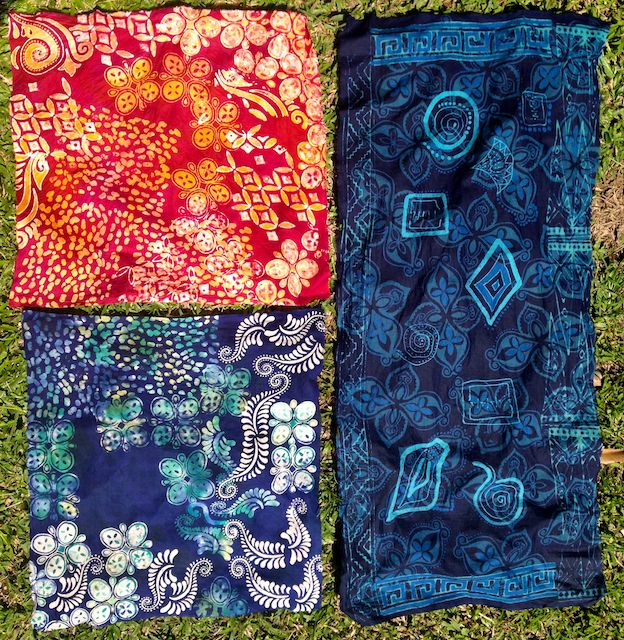
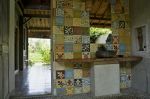
The process of making batik fabric is complex and quite time consuming. As a new student to this technique, I figured there would be a lot to learn before I actually started making fabrics. That wasn’t the case with my teachers; with a bit of a language barrier, they preferred to show instead of tell. They were anxious for me to jump in, start sketching, stamping, dyeing and making a few pieces. The first 5-hour workshop, I created a fuschia piece which was inspired by the tile in our bathroom. It is highly ornate, colorful and 90% done by hand (as opposed to with stamps). The colors were a complete surprise to me. When I pulled the final dip out, fixed and rinsed it, I was shocked it was not the deep red I was hoping it would be. An unexpected but beautiful happy accident.

 8  6

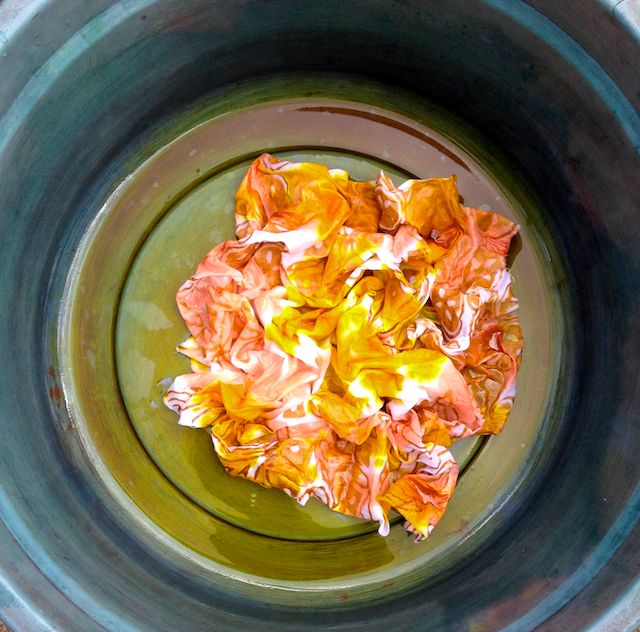
In subsequent classes, I am experimenting with double- and triple-processing of dyes, tie-dyeing, color mixing and multiple layering of wax application. It’s humbling to be a part of the creative process, especially when I try to plan out what I’m going to make before each workshop (insert laughter). For all the reading I do between classes, color wheel mixing diagrams I study or thoughtfully planned out pieces I attempt to make (oops, that scarf just became a napkin!!), it’s actually quite fun to be surprised by this imperfect art form. As my instructor Komang says, “There are no mistakes in batik.”

 7  4  5

Hindu offerings in Bali

Posted on February 19, 2014

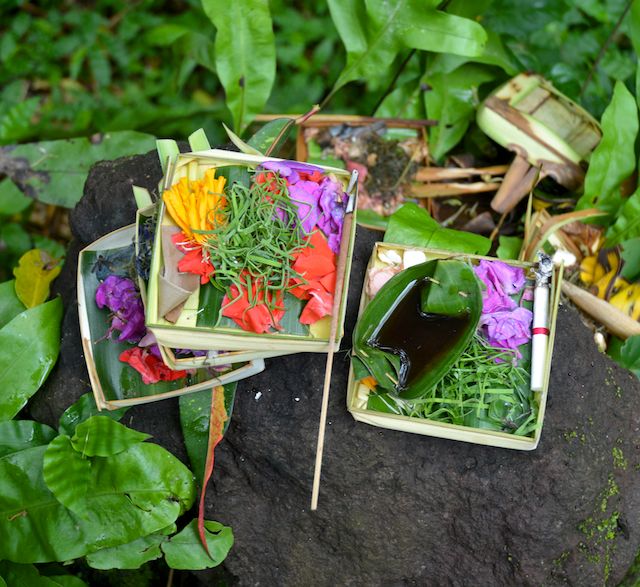
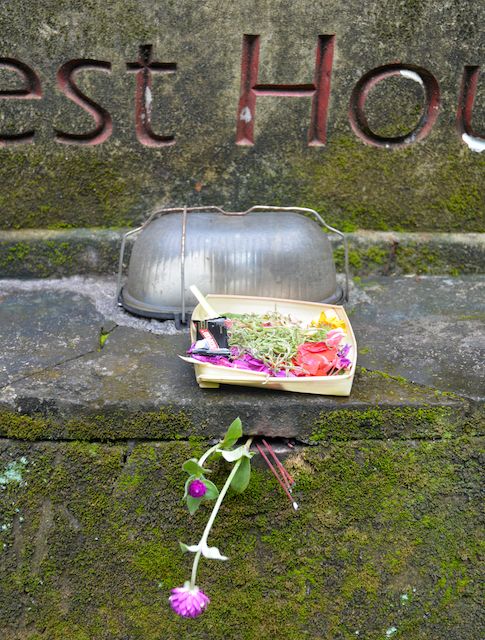
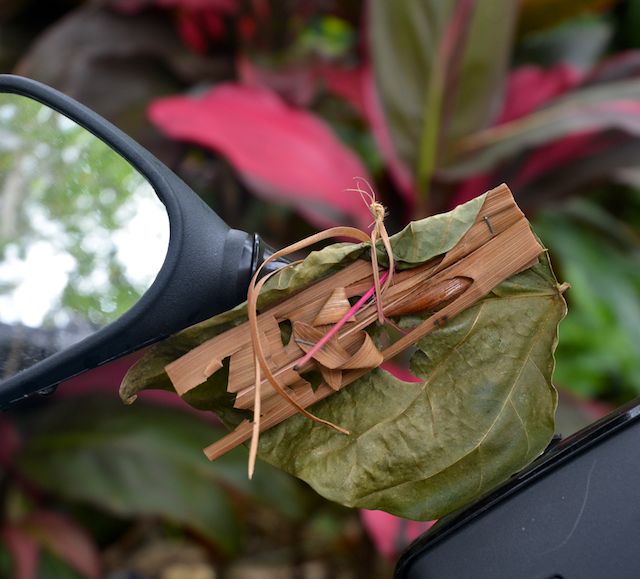
Ubud, Bali, Indonesia: We awoke our second morning in Bali to find in our entryway a rosette-shaped palm frond filled with colorful flowers, rice and burning incense. This was the first of many hundreds of offerings we would see around town, in the rice fields, along the roads and even on motorbikes. We knew these were ways of showing religious devotion, but little else. So we asked around, did a little research and found out about these offerings were beautiful expressions of the Hindu religion.

 3

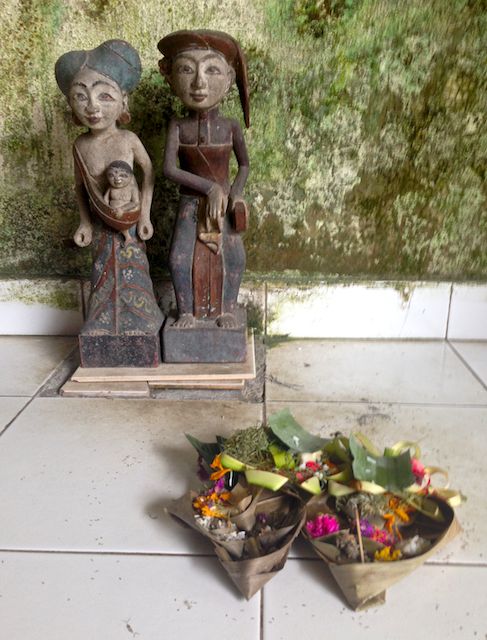
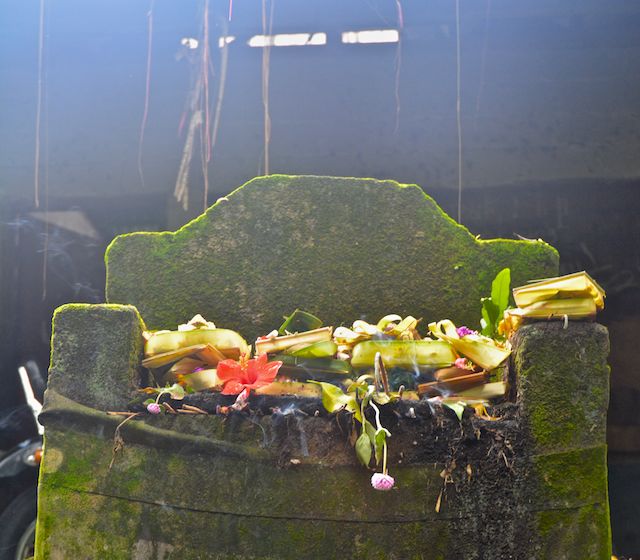
Offerings are an integral part of Balinese daily living and show reverence to the gods. The handcrafted offerings are made out of natural materials and are placed at the entrance to homes, at family and main temples, before and on statues, even at corners of intersections to ward off accidents and aid in protection. The offerings are blessed and then left untouched and allowed to be destroyed by the elements.
 5

The offering left at our front stoop that first day and every other day we’ve been here is called canang sari. We learned it is the simplest daily household offering, and is given to the supreme god as a form of thanking him for the peace he has given to the world. We think this means our neighbors are asking the gods & blessing our home for continued peace. What a beautiful message, delivered by a lovely old woman who smiles kindly. We couldn’t have been more humbled by this gesture.
 2

More complex daily and ceremony offerings are a part of Hinduism in Bali as well. Today (February 19) for example, is the celebration of money. Many businesses in the main area of Ubud are closed, and the ones that are open have women inside preparing dozens of these little offering parcels. Many of them are placed around the shop and outside the front door, piled high on the sidewalk. Today marks the 8th day we’re here, and already there have been 3 big ceremony days. It’s estimated there can be as many as 180 ceremonies a year, celebrating the gods, important dates in humans’ lives, priests, ancestors and devils.
 1

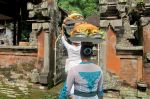
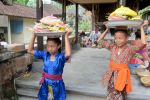
We learned that a household will have one person (usually a woman) dedicated to preparing the daily offerings, and she could easily spend an hour a day preparing and making the blessings. On the high days, the process of preparing an adequate number of offerings may take her up to four hours. Distributing them to various temples, ashrams and shrines takes additional hours, and we’ve seen women in ornate ceremonial garb across town carrying what appear to be extra large serving trays. These women are carrying their offering parcels to various spots across town, and blessing them once there.
 7

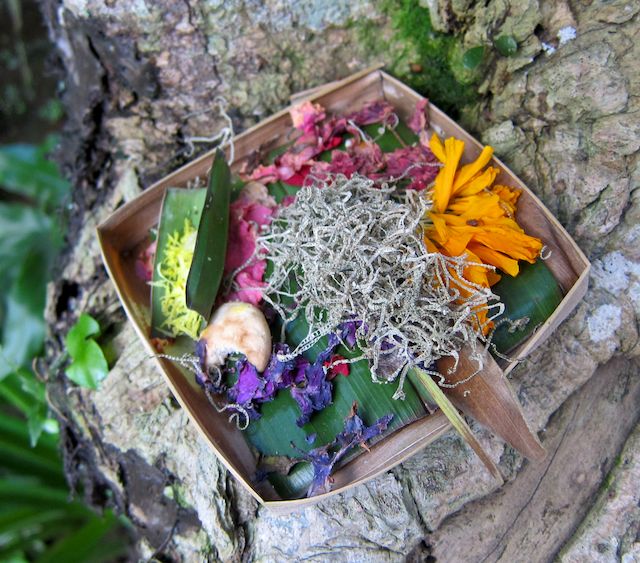
Extremely labor intensive, each offering is hand made and constructed out of palm or banana leaf. When completed they look like exquisite origami containers that then house the actual offering. Typical flowers used in offerings are hydrangeas, plumeria, marigold, sandat and pacah – all brilliant colors that represent the chakras. Offerings can include token money like Chinese coins for prosperity or food items such rice (which the chickens outside our home love to peck). Incense is lighted and placed in the offering as the blessing is made.
 6

We’ve really enjoyed looking for new offerings near our home and across town, and feel the warmth of the Balinese people with each one we discover. Prepared with love and with prayers for peacefulness, these beautiful offerings are one of the many things we’ve come to love about Bali and the generous people here.
 4

Our new home in Ubud

Posted on February 14, 2014

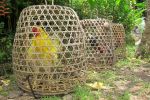
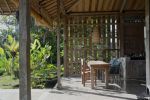
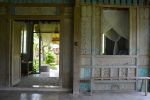
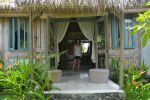
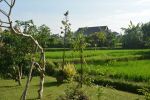
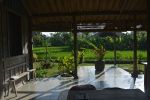
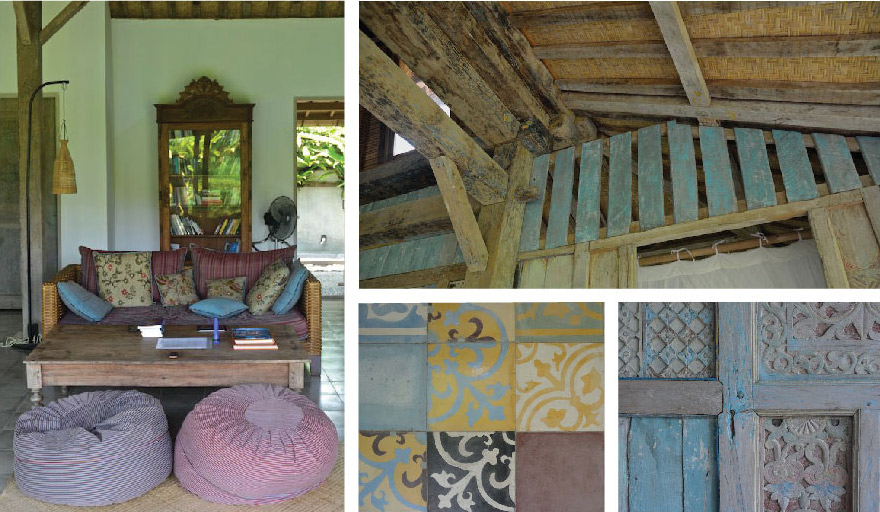
Ubud, Bali, Indonesia: For the first month we’re in Bali, we’ll be living in this joglo just outside Ubud. It’s been beautifully restored to fit with the rest of the homes in the rice paddy community. It’s a 20 minute walk to the center of Ubud, so we are away from the sounds of this now bustling but still charming artist community. Because we are literally situated in a rice paddy, we are in the middle of a tropical farm of sorts. Chickens walk by each morning, nonchallantly checking out their new human visitors. Roosters crow, sometimes reaching protest-like volumes. And the best part is the frog symphony each evening. Thousands of frogs erupt into song, each outdoing the other. It’s so relaxing to sit in our open-air living room looking out onto the rice paddy and hear these gorgeous animals sing us into the night.

COLLECTION

Hot water beach

Posted on February 5, 2014

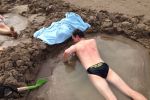
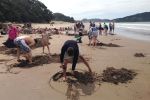
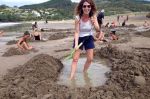
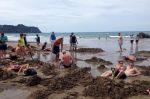
Hot Water Beach, Coromandel Peninsula, North Island, New Zealand:  This place was unbelievable.  Under the sand beach lies a hot water spring, which is accessible for 2 hours either side of low tide.  The water reaches temperatures of 67 degrees Celsius, and people hunt & peck for the perfect spot to lie in the toasty water. We rented a spade from the local surf shop, made our way to the beach, dug the perfect hole (not too hot, not too cold) and chilled in our personal hot spring for 3 hours.